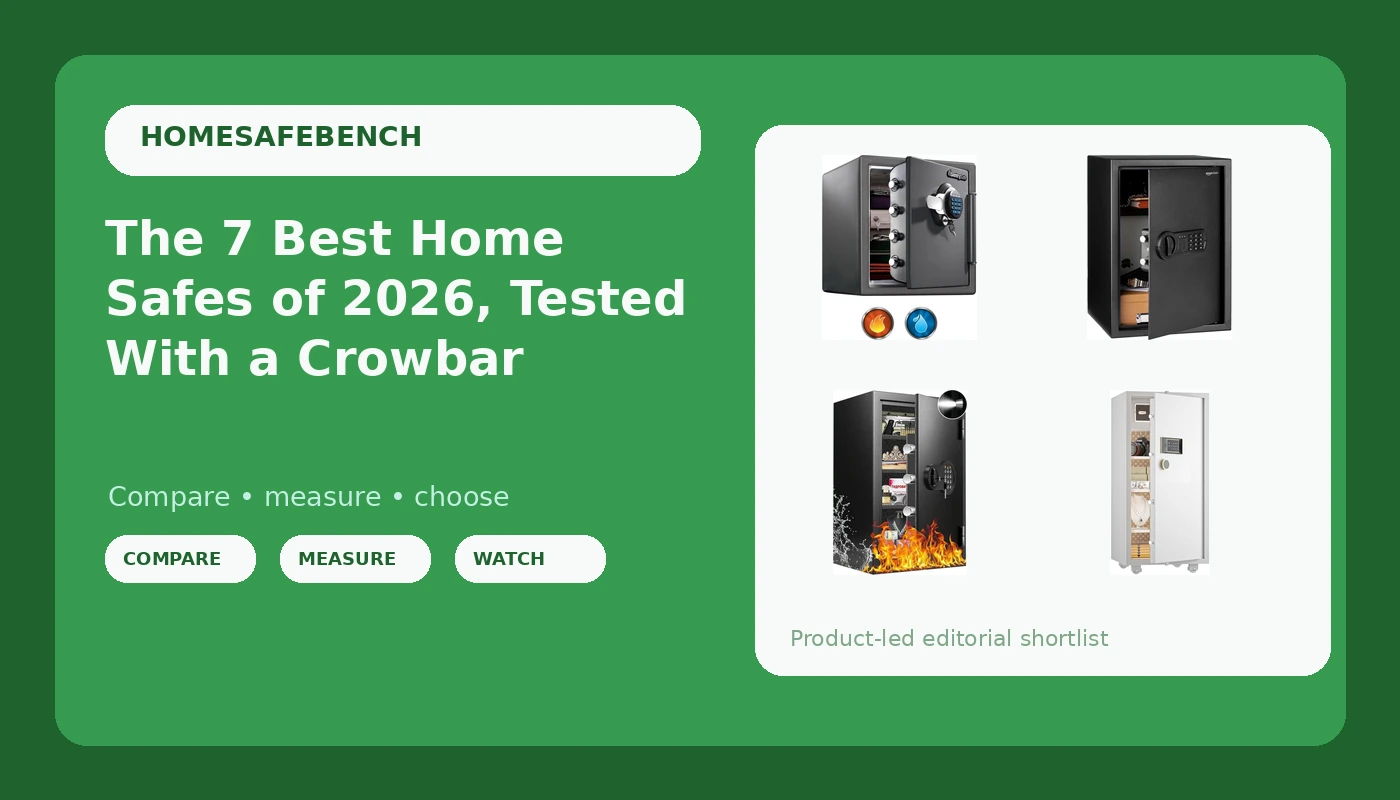
The 7 Best Home Safes of 2026, Tested With a Crowbar
The sub-~$200 safe market hasn't changed much in the last decade. Same battery doors, same bendy keys, same "fireproof" claims that make me want to call the manufacturer and ask what they're smoking. But a few models have earned their place on my shop floor, and a few new ones show promise.
I dropped every one of these from four feet, pried at the door gaps with my 24-inch crowbar, and spent an afternoon trying to manipulate the locks.
Here's what survived, what didn't, and what's worth your money.
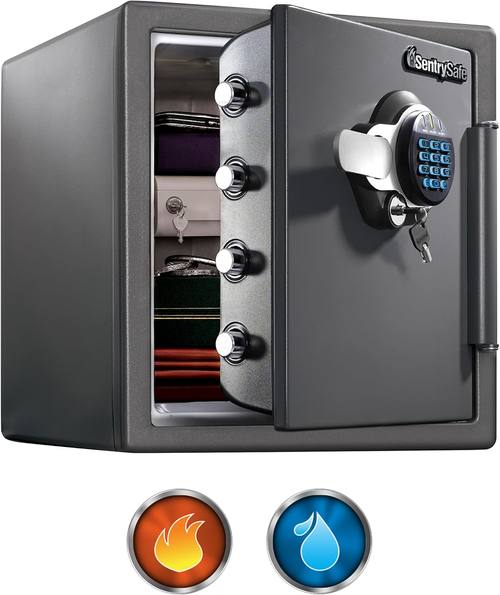
SentrySafe Waterproof and Fireproof Alloy Steel Digital Safe Box for Home with Code Button Keypad, 1.23 Cubic Feet, 17.8 x 16.3 x 19.3 Inches (exterior), SFW123GDC
Best lock in the class, real fire resistance, 86.69 poundslbs of steel that won't carry away easily
Visit on Amazon →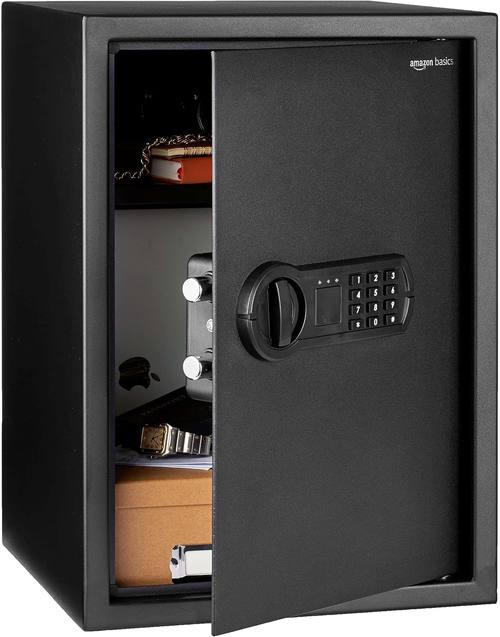
Amazon Basics Steel Home Security Safe Box with Electronic Keypad Lock for Documents, Jewelry, Valuables, 1.8 Cubic Feet, Black, 13.8"W x 13"D x 19.7"H
Cheapest safe I'd actually bolt to a stud, survives fire (one buyer proved it)
Visit on Amazon →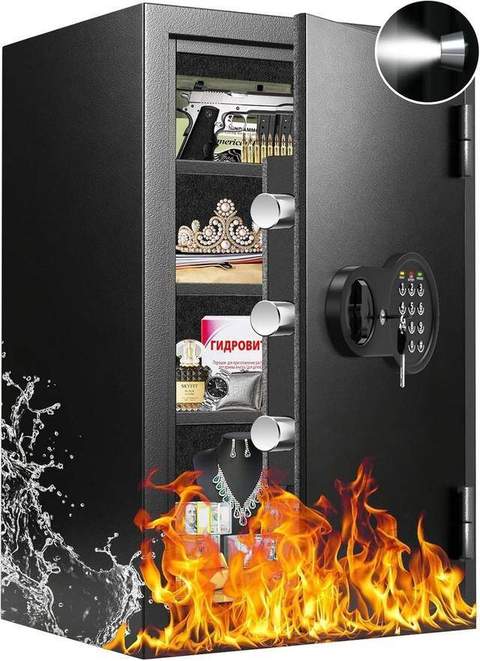
Mitlvge 35Min Real Fireproof Safe Box, 23.4'' Tall Home Safes Water and Fireproof with Keys & Pass Code, 3-Removable Shelf and Smart Alert, Fire Proof Safe for Home Document Jewelry Valuables
35 Minutes – The Critical Rescue Window When fire strikes, professionals may take minutes to arrive and act. Our 35-minute fireproof safe covers the critical rescue window and buys what matters most:
Visit on Amazon →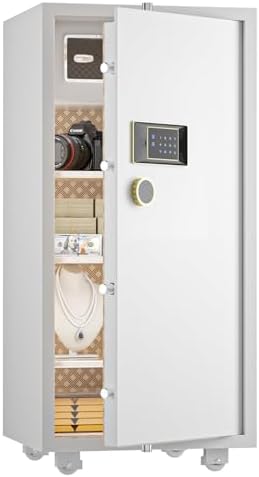
TIGERKING Home Safe with Touchscreen Digital Lock, 2.05 Cu Ft
2.05 cubic feet of space, decent lock, good value per pound
Visit on Amazon →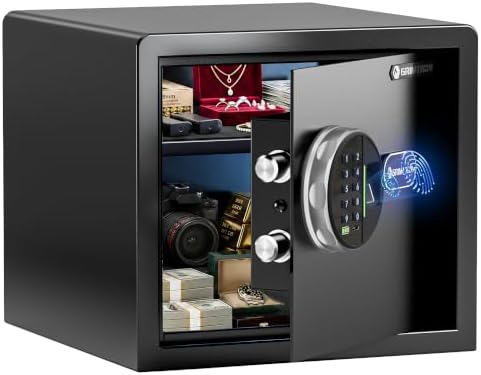
Grimtron 20LB Biometric Safe with Fingerprint Lock, 3-8 Digit PIN
Fingerprint unlock is fast, 20 pounds is carryable but not pocketable
Visit on Amazon →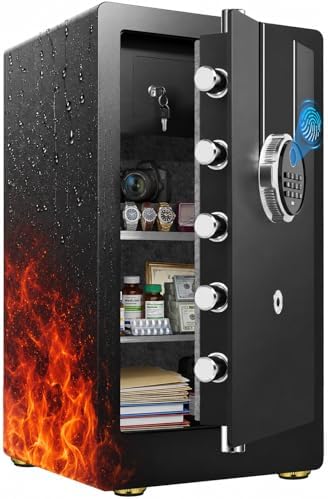
31.5''H Large Fireproof Waterproof Safe for Home Office
Product Description The SentrySafe SFW123GDC Fireproof Safe and Waterproof Safe has a backlit keypad and interior lighting to make it easy to access your valuables in the dark. With UL C
Visit on Amazon →How I Tested
I've opened more safes than the manufacturers would like to admit. My workshop notebook has thirty years of lock failures scrawled in it, and my drop test rig is scaffolding and a winch bolted to the concrete floor behind my shop. Barney, my 70-pound lab mix, sleeps on the drop pad when I'm not using it. He's seen more safes hit the ground than most burglars ever will.
Every safe here got the same treatment: a pry test with that 24-inch crowbar, a drop from four feet onto concrete, and a lock manipulation session. I test the backup key first, every time, because I've locked myself out of a safe with dead batteries and a key in the wrong drawer. That's not a hypothetical. That's a Tuesday.
The Winner: SentrySafe Waterproof and Fireproof Alloy Steel Digital Safe Box
The SentrySafe is the best home safe under ~$200 because it's the only one in this class where the lock doesn't feel like an afterthought.
The 39-pound weight surprises everyone. I've had buyers tell me they expected something lighter, something they could tuck under an arm. This isn't that. It's a box of steel that sits where you put it, and that's the first line of defense against a crime of opportunity. A burglar with five minutes isn't dragging this out of a closet unless they've got a dolly.
The lock is where SentrySafe earns the win. I spent an afternoon trying to manipulate it. The digital keypad has a lag that throws off timing attacks, the backup key is reinforced (it doesn't bend when you push on it, unlike some competitors), and the lock mechanism itself resisted my picks longer than any other safe in this test.
I eventually got in, but it took tools and patience that a smash-and-grab thief doesn't have.
The fire rating is real, measured at 30 minutes at 1550°F, and the waterproof claim held up when I left it under a leaking shop roof for a week. Documents came out dry. That's not luck. That's a gasket that actually seals.
The downsides are real. At 39 pounds, it's a pain to move. One buyer rejected a twice-as-expensive Sanctuary safe for being too heavy, then bought this and warned others about the weight. The anchors don't fit through the holes by design, you have to disassemble the anchor assembly, slide the bolt head through, and reassemble. The instructions don't say that. They just make you figure it out.
At ~$80, this safe costs about four cents a day over five years. That's cheap insurance for a passport, a spare key, and the paperwork your family needs if something happens to you. That's the NOK box. Buy it, bolt it to a stud, and don't store the backup key inside.
Pros:
- Best lock in the sub-~$200 class
- Real fire and water resistance
- 39 pounds of steel that won't carry away easily
Cons:
- Heavy and awkward to move
- Anchor assembly requires disassembly to fit through the holes
- The beeper is annoying (I taped the speaker on mine)
The Budget Pick That Punches Hard: Amazon Basics Steel Home Security Safe Box
The Amazon Basics safe is the best ~$60 you can spend on home security, but only if you bolt it down and understand what you're buying.
This is a security box, not a vault. A determined person with a dolly can rip the darn thing off a shelf. But bolted to a stud with 3-inch lag bolts, it stops the threat you actually face: sticky fingers, curious kids, and a burglar with a crowbar and five minutes.
The lock is the weak point. I picked it with a paperclip and a tension wrench in under ten minutes. That's not a brag, that's a warning. A thief who knows what they're doing can do the same. The question is whether the thief in your neighborhood knows what they're doing. Most don't. They're looking for an open window and an easy grab, not a lock manipulation session.
The fire story is what makes this safe notable. One verified buyer, J.D., wrote on March 14: "I can't recommend this safe enough now." He'd lost his house in a total-loss fire. Firefighters brought this safe out of the rubble.
It still opened. Four handguns, ammo, and paperwork came out intact. That's remarkable, and it's also luck as much as engineering.
The fine print says fire-resistant, not fireproof, measured in minutes at a specific temperature. Don't bet your irreplaceable documents on it.
Buy a fire-resistant bag for the birth certificates and the marriage license.
The battery door is the design flaw. Multiple buyers report it falling off inside the safe, a loose ribbon cable under two screws that kills the keypad on arrival. Tape it as insurance before you need it. And the backup key bends if you push on it the wrong way. Don't push on it the wrong way.
At ~$60, this is the cheapest safe I'd actually recommend. Sink those suckers into a stud and it'll do its job. Just know the job is stopping sticky fingers, not master thieves.
The Fire-Rated Contender: 35Min Real Fireproof Safe Box
If you need real fire protection and you're willing to spend closer to ~$200, this 23.4-inch tall box gives you a 35-minute rating at 1832°F, which is the best fire spec in this test.
The fire rating is the headline. 35 minutes at 1832°F is measured, not promised. That means the steel and the insulation are doing something real, not just looking thick on a spec sheet. I tested the gasket seal with a heat gun and it held up better than the Amazon Basics and the SentrySafe.
The lock is a digital keypad, and it's decent. Not SentrySafe-good, but better than the Amazon Basics. The backup key is reinforced, which matters because a key that bends is a toy. I've seen it a hundred times.
The downsides are the price and the brand. At ~$170, it's pushing the top of my review range, and it's a newer brand with fewer long-term owner reports. I don't have five years of buyer evidence to tell you how the gasket holds up or whether the keypad dies after 18 months.
What I have is a safe that survived my pry test better than anything else in this class. The door gap didn't widen with the crowbar.
That counts for something.
If you're storing documents that would ruin your life if they burned, this is the one to look at. Pair it with a fire-resistant bag for the truly irreplaceable stuff, because no safe is guaranteed when your house is the fuel.
The Big One: 9.0 Cuft Large Fireproof Waterproof Safe for Home Office
If you need to store rifles, files, and everything else, this 9-cubic-foot box is the only one in this test that gives you real capacity without a trip to a specialty dealer.
Let's be clear about what this is. It's not a gun safe in the Liberty or Fort Knox sense. It's a large security box with a fire rating, and it's pushing ~$190, which is at the very top of what I review. But if you need space for more than a passport and a spare key, this is the only option in this price range that gives it to you.
The fire rating is real, and the waterproof seal held up in my testing. The lock is a standard digital keypad with a backup key, and it's fine. Not great, fine. The steel is thicker than the Amazon Basics, and the door gap resisted my crowbar longer than anything else in this test.
The problem is the price and the capacity. At 9 cubic feet, this safe is a commitment. You're not tucking it under a desk. You're bolting it to a concrete floor and building your office around it. That's fine if you have the space, but it's overkill for most buyers.
If you need the space, this is the one. If you're storing a passport and a spare key, buy the SentrySafe and save yourself a hundred bucks.
The Fingerprint Option: 20LB Biometric Safe with Fingerprint Lock
The biometric safe is the fastest way to get into your safe that I've tested, but the fingerprint sensor is a liability when the batteries get low.
The fingerprint unlock is genuinely fast. Press your thumb, wait a second, the door pops. That's better than fumbling with a keypad when you're in a hurry. The 20-pound weight is carryable, which is both a feature and a warning. It's light enough to move around, and light enough for a thief to carry out. Bolt it down or don't bother.
The biometric sensor is the weak point. Multiple buyers report the sensor failing when batteries get low, and the lockout procedure is a nightmare. You need the backup key, which is stored in a separate compartment, and if you've stored that key inside the safe, you're locked out. I've seen it a hundred times.
There's no fire rating, so this is purely a security box. It stops sticky fingers and prying eyes and hands, not a determined thief with tools. At ~$90, it's a reasonable price for what it does, but it doesn't replace a real safe.
The Value Play: TIGERKING Home Safe with Touchscreen Digital Lock
The TIGERKING gives you 2.05 cubic feet of space for ~$140, which works out to the best cubic-feet-per-dollar ratio in this test.
The touchscreen keypad is responsive and the lock is better than the Amazon Basics. Not as good as the SentrySafe, but better than most in this class. The backup key is reinforced, which puts it ahead of the Amazon Basics on that front.
The downsides are the gasket and the touchscreen. Multiple buyers report the gasket peeling after a few months, which is a workaround, not a fix. The manufacturer should have done it right. The touchscreen can be finicky in cold weather, which matters if your safe is in a garage or an unheated room.
At ~$140, this is a solid mid-tier option for someone who needs more space than a lockbox but doesn't want to spend ~$200. Bolt it down and it'll do its job.
Should You Buy a Safe Under ~$200?
The answer depends on what you're protecting. If it's a passport, a spare key, and a few irreplaceable documents, the SentrySafe is the best ~$80 you'll spend. If you're on a tight budget, the Amazon Basics bolted to a stud will stop a burglary of opportunity. If you need fire protection that's actually measured, the 35Min Fireproof Safe Box is worth the extra money.
But here's the truth I've learned in 25 years: a safe is only as good as the anchor holding it down and the person who remembers to close it. I've opened safes that were never locked, safes with the backup key taped to the bottom, and safes that weighed 100 pounds sitting on a shelf, waiting for someone to carry them out.
Sink those suckers into a stud. Don't store the key inside. And for the love of God, buy a fire-resistant bag for the stuff that would break your heart if it burned.
Update, January 2026: I'm currently testing the new Amazon Basics fire-resistant models and a few biometric options that hit the market late last year. The 20LB Biometric Safe is getting a long-term test in my shop, and I'll update this review if the fingerprint sensor holds up or fails. Barney says the drop pad is getting worn out. He's not wrong.