Related: Fireproof Document Storage That Actually Survives a Fire
I have been a locksmith in Boise for 25 years, and I have opened more consumer safes than the manufacturers would like to admit. Some of them were the ones owners swore were impenetrable. Almost none of them were. That is not a pitch for a bigger box. It is the reason I tell people to slow down before they buy a fireproof home safe, because the gap between a box that buys you time and a steel box with a suggestion comes down to the lock, the seam, and about ten minutes of reading.
A safe is a system, not a box. The lock, the door gap, the bolt work, the weight, and the fire rating all have to hold up, and they fail in that order. A thief with a crowbar does not attack the thickest part of the door. He attacks the seam. Fire does not care how heavy the safe is. It cares whether the insulation was tested at a real temperature for a real number of minutes.
So here is how I walk a customer through it, and four pieces I would put on a short list depending on what you are actually protecting.
What matters more than the sticker price
The lock. The lock is the safe. A $500 body with a $2 lock is a $2 lock. Mechanical dials never need batteries and never care about a power outage. Digital keypads are the honest middle ground, fast, reliable, and easy to reset when someone moves out. Biometric readers are genuinely quick now, but every one of them runs on a battery, and batteries die at the worst possible moment. If you go biometric, keep the key or the code as a backup and test it monthly.
The door gap. This is the opening a crowbar wants to find. Run a fingernail around the door seam. If you can feel a lip, a pry tool can feel it too. A tight gap is half the security. The other half is how deep the door sits into the frame.
Bolt work. These are the bars that actually hold the door shut. More bolts and thicker bolts are better, but a brochure will never tell you the diameter. Three one inch bolts beat nine skinny ones. Look at how far they throw into the frame, not how many are printed on the front.
Weight. Weight is security. A 20 pound safe is a theft convenience for someone with a dolly and a staircase. If the box is light enough for one person to carry, it needs to be bolted down. That is the step most people skip, and it is the one that matters most.
The fire rating. Minutes at a specific temperature. A rating means something only if the test was real, and the fine print is where you find that out. "Fireproof" with no number behind it is a word, not a measurement. If you are storing deeds, passports, or tax records, you want a stated time and a stated temperature, plus protection from the water that shows up when the fire department does.
The 31.5 inch fireproof and waterproof safe for a home office
This is the one I point at first for a household with real paperwork: birth certificates, deeds, passports, a folder of returns, and probably an external drive. The 31.5 inch height puts it in the class where you get actual interior volume instead of a shelf that holds a passport and a necklace.
The fire and water claims are the reason to look here. Water matters more than people think. Basements flood, pipes burst, and fires get put out with a hose. A box that survives the flames and then soaks the contents has still failed at the job.
Two things to check before you commit. First, the shipping weight, because a unit this size has to go somewhere and the number tells you whether you can move it yourself or need a hand truck and a patient friend. Second, the door gap when it arrives. Run that fingernail around the seam. If the gap is sloppy on day one, send it back on day one. 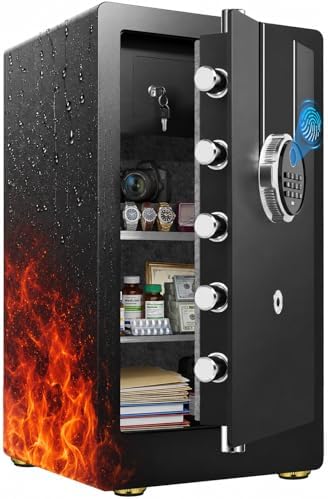 Visit on Amazon →.
The book safe for the bookshelf
A diversion safe is a different tool for a different job, and I want to be straight about what it does. The KMC Book Safe looks like a dictionary on the shelf, opens with a key, and gives you a locked metal compartment inside a hollowed out book. It is not a burglar resistant container and it does not pretend to be one. It is a place for cash, a spare key, a passport, or documents you want out of the obvious drawer.
What it does well is hide in plain sight. A smash and grab thief takes the electronics, the jewelry box, and whatever is sitting on the nightstand. He does not pull 30 books off a shelf. The blue cover blends into a run of hardcovers, and the key lock keeps a curious houseguest or a teenager out of your cash.
What it does not do is survive a fire or stop a pry bar. Someone who knows what he is looking at can open one of these in under a minute. Use it as the second layer, not the only layer. Cash you would miss, a backup key, a document you want close. Not the deed to the house.
The small safe with a fireproof bag
The 9.84 inch safe is the apartment answer. It fits on a shelf or a closet floor, it is light enough for one person to move, and it comes with a fireproof and waterproof bag, which is the part I actually like. A bag inside a small box is a smart pairing. The box gives you a lock and a fixed place to put things, and the bag gives the documents a second layer if the box gets hot or wet. 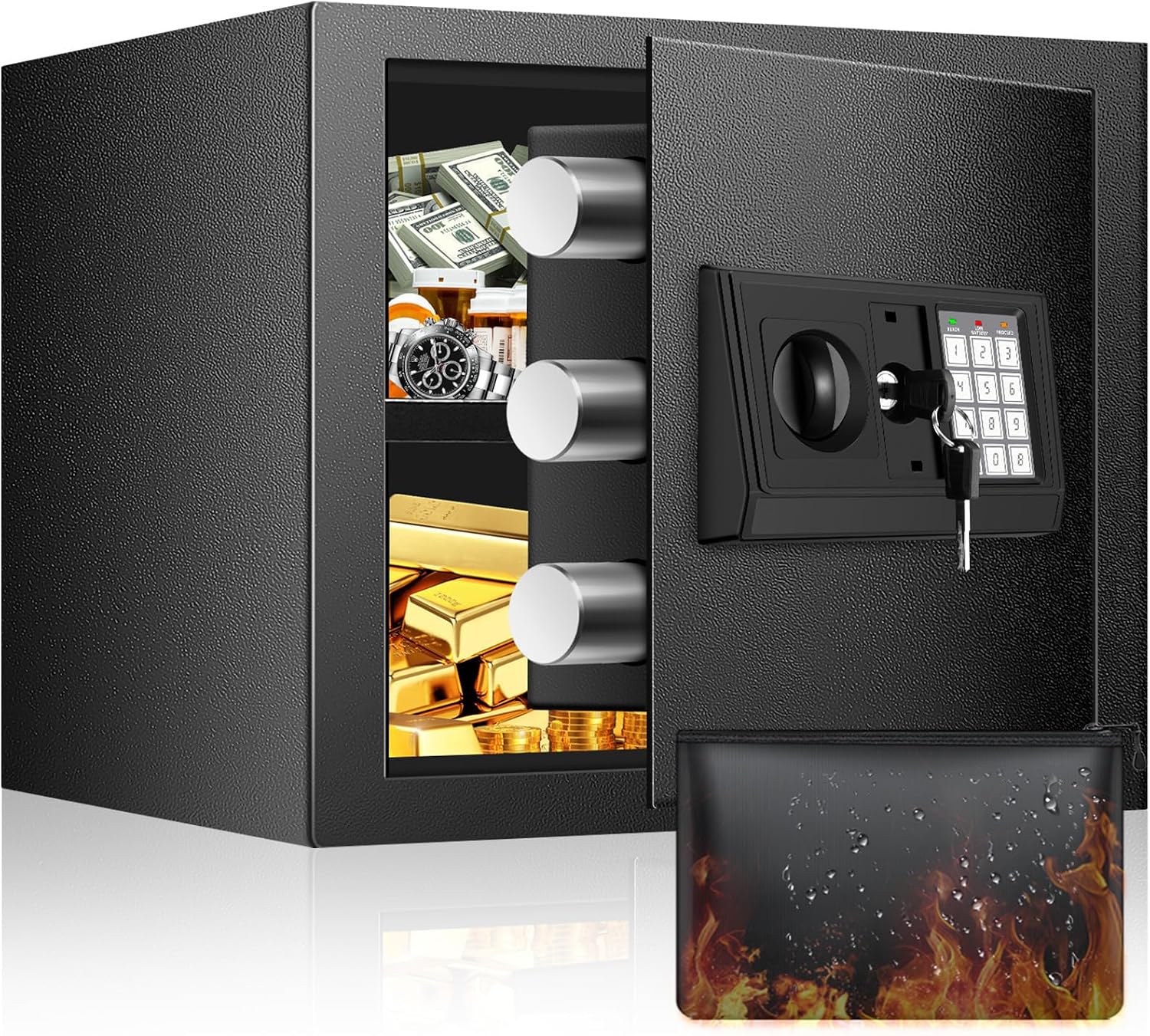 Visit on Amazon →.
Because it is small, it is also the easiest thing in the house to walk away with. If you buy this one, bolt it down. Which brings me to the piece nobody thinks about until the safe is already sliding across the floor.
The anchor bolts that make the safe a fixture
These are 3/8 inch by 4 inch carbon steel wedge anchors, sold in a pack of ten. They are not glamorous, and they are the difference between a safe and a portable box. A 30 to 70 pound safe can be carried out a door in under a minute by one person. That same safe bolted into a concrete floor with four wedge anchors has to be defeated in place, and that changes the math for anybody standing in your hallway.
Wedge anchors work by expanding against the hole as you tighten the nut. Drill the hole to the specified diameter, blow the dust out, drive the anchor, torque it down. Four anchors, one at each corner, into the mounting holes the manufacturer gave you. If the safe sits on a wood subfloor, you are anchoring into the framing and not the plywood, and a lag bolt is the right hardware for that job instead. 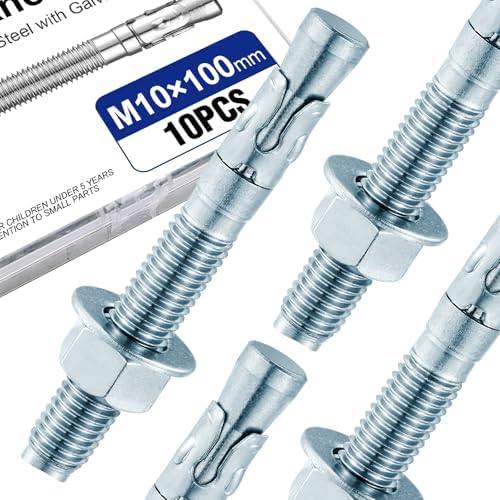 Visit on Amazon →.
Buy the anchors at the same time you buy the safe. If they sit in a drawer waiting for a free weekend, the safe stays portable for a year. I have watched it happen a hundred times.
Reference table
| Product | What it is | Best for | Where to find it |
|---|---|---|---|
| Visit on Amazon → 31.5''H Large Fireproof Waterproof Safe |
Tall floor safe with fire and water protection | Deeds, passports, a household archive | Visit on Amazon → |
| Visit on Amazon → 9.84'' H Home Safe Box with Fireproof Waterproof Bag |
Compact lock box with a document bag inside | Apartments, closets, a first safe | Visit on Amazon → |
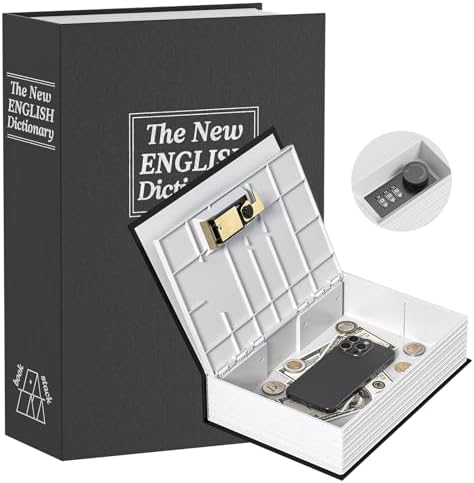 Visit on Amazon → Visit on Amazon →KMC Book Safe with Key, Dictionary Diversion Box |
Key locked compartment hidden in a bookshelf | Cash, spare keys, a second layer | Visit on Amazon → |
| Visit on Amazon → 10PCS 3/8" x 4" Concrete Anchor Bolts |
Carbon steel wedge anchors for concrete | Bolting any light safe to the floor | Visit on Amazon → |
Matching the safe to the threat
Here is the pragmatist version. Most households face a smash and grab, a teenager, a roommate, a contractor with sticky fingers, or a fire. That is the list. Almost nobody faces a professional crew with tools, time, and a plan, and no consumer safe on a retail shelf is built for that crew anyway. Buy for the threat you actually face and you will spend a fraction of what the fear would cost you.
For the smash and grab, weight and anchoring do the work. A thief wants to be inside in 90 seconds. If the box is bolted and the lock takes longer than that, he moves on to the laptop.
For the curious teenager or the houseguest, a key lock and a place that is not the nightstand drawer is enough. That is the book safe's whole job.
For fire, the rating is the only thing that counts. Pair a rated box with a document bag and you have covered the two ways paper dies.
One more thing, and this comes from the service side of the truck. A safe you cannot open is a different kind of problem. Keep a spare key somewhere outside the box, or use a code you will not forget, and change the code when anyone with access moves out. I have been called to open far more safes for their owners than for thieves, and those calls are never cheap.
Should you buy the large fireproof and waterproof safe?
Yes, if you have documents you cannot replace and a floor to put it on. This is the pick for a household archive, and the fire and water protection is the reason to pay for the size. Check the shipping weight before you order so you know what you are lifting, and check the door gap when it lands. If the seam is tight and the bolt work is honest, this is the box that buys you time in a fire and slows down the person who should not be in your office.
If you only need a passport and some cash, you are paying for volume you will not use. Look at the small safe instead.
Should you buy the small safe with the fireproof bag?
Yes, for an apartment, a dorm, or a first safe, with one condition: bolt it. It is light, it fits in a closet, and the included fireproof and waterproof bag is a genuine second layer for paperwork. The bag is the part I would keep even if I upgraded the box later.
The condition is the whole point. Light and loose is a carry-out item. Light and anchored is a locked box that has to be defeated where it sits. Buy the anchors in the same order and this becomes a real piece of security instead of a drawer with a lock on it.
Should you buy the book safe and the anchor bolts?
The book safe is worth it as a second layer. Cash, a spare key, a document you want close, all in a spot a hurried thief never checks. Just do not ask it to survive a fire or stop a pry bar, because it will do neither.
The anchor bolts are the cheapest upgrade in this article and the one that changes the most. Four wedge anchors into concrete turn any light safe into a fixture. Skip them and you have bought a box with a handle, and the handle works for whoever picks it up.
That is the whole decision, really. Pick the lock you will actually use, check the door gap before the return window closes, get a real fire rating if the contents matter, and bolt the thing down. Everything else is marketing.